Saturday, March 1, 2014
SMCC 2014: San Marino Chamber Choir presents Recital at Catedral de León on March 31.
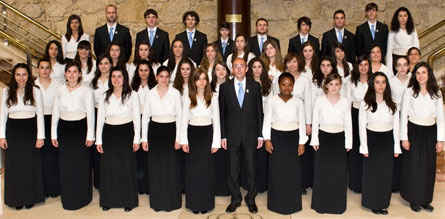
The San Marino Chamber Choir, under the direction of Dr. Tammi Alderman, was granted permission to present a special recital at the marvellous Catedral de León, the gothic masterpiece in Leon, Spain, on Monday March 31, at 12:30, during their 2014 Incantato Performance Tour to Spain and Portugal
The Cathedral of Leon can look back on a 800-years history. The Pulchra Leonina, as it was called (latin) due to its outstanding beauty, is a remarkable visit for travelers, artist, archeologists and pilgrims, as it is a main stop along the Camino de Santiago - Way of St. James.
The Catedral de Santa María de Regla de León (as it is officially named) is a French-style Gothic cathedral was begun to be built by Bishop Martin Fernandez, with funds from King Alfonso the Wise, in 1255 over the ruins of 2nd-century Roman baths, and stands as probably the finest Gothic building in Spain, closely modeled on the Flamboyant Gothic royal cathedrals of France, and sharing master carvers with Burgos cathedral.
The north transept adjoins to the 13th- and 14th-century cloister, which has carved capitals, Romanesque and Gothic tombs, and some faded frescoes.
Inside, some 125 medieval stained glass windows illuminate a harmonious, fully French Gothic interior with three aisles, a short transept, a five-bay choir, and an ambulatory with radiating chapels.
The effect of the pale stone combined with dazzling rays of sunlight filtering through the windows have given the cathedral the nickname "House of Light."
León Cathedral's choir stalls, among the oldest in Spain, were carved of walnut by Flemish artists in the 15th century. A much-revered statue of the Virgen de la Esperanza, depicting the Virgin Mary when she was pregnant with Jesus, dates from the 13th or 14th century and is displayed in a side chapel off the choir.
For more information on the history and significance of this venue, please visit the official Catedral de Leon website.
The Cathedral of Leon can look back on a 800-years history. The Pulchra Leonina, as it was called (latin) due to its outstanding beauty, is a remarkable visit for travelers, artist, archeologists and pilgrims, as it is a main stop along the Camino de Santiago - Way of St. James.
The Catedral de Santa María de Regla de León (as it is officially named) is a French-style Gothic cathedral was begun to be built by Bishop Martin Fernandez, with funds from King Alfonso the Wise, in 1255 over the ruins of 2nd-century Roman baths, and stands as probably the finest Gothic building in Spain, closely modeled on the Flamboyant Gothic royal cathedrals of France, and sharing master carvers with Burgos cathedral.
The north transept adjoins to the 13th- and 14th-century cloister, which has carved capitals, Romanesque and Gothic tombs, and some faded frescoes.
Inside, some 125 medieval stained glass windows illuminate a harmonious, fully French Gothic interior with three aisles, a short transept, a five-bay choir, and an ambulatory with radiating chapels.
The effect of the pale stone combined with dazzling rays of sunlight filtering through the windows have given the cathedral the nickname "House of Light."
León Cathedral's choir stalls, among the oldest in Spain, were carved of walnut by Flemish artists in the 15th century. A much-revered statue of the Virgen de la Esperanza, depicting the Virgin Mary when she was pregnant with Jesus, dates from the 13th or 14th century and is displayed in a side chapel off the choir.
For more information on the history and significance of this venue, please visit the official Catedral de Leon website.
SMCC 2014: Incantato proudly presents the Choral Exchange with the Youth Choir of Prince of Asturias Foundation
Dear travellers and friends of San Marino Chamber Choir,
![]() |
| Prince of Asturias Awards Finale Concert with Prince of Asturias Choir |
The Prince of Asturias Foundation, under the Presidency of HRH The Prince of Asturias, has a great international reputation, due to cultural activity along the year (as Prince of Asturias Awards), and also to the high quality of its musical activities and choirs under its Music Department.
You can take a look to the videos of some Awards Ceremonies here
(By the way, let me share with you that it was during this Awards that HRH The Prince Felipe got to met his wife Letizia, now Princess of Asturias, where she was working as special journalist for the TV)
The Music Department
In
1983 the Prince of Asturias Foundation, a private organization whose aim is to
contribute towards strengthening the links between the Prince of Asturias, the
heir apparent to the Spanish throne, and the Principality of Asturias, formed a
polyphonic group that whilst fostering the traditional love of the people of
Asturias for choral music, would elevate it to its greatest heights.
With Jesús López Cobos and Krzysztof Penderecki as Honorary Conductors, the Music Department runs different activities during the whole year: International Music School, the Concerts and the Choirs.
THE YOUTH CHOIR
The Youth Choir was founded in 1988 and is currently made up of young
musicians from 15 to 25 years of age. It is one of the three choirs
–also the Senior Choir and the Children’s Choir- that make up the Music
Department of the Prince of Asturias Foundation, which has more than 300
voices.
They keep performing at national concerts.
In 2001, they obtained the second Prize at the Children’s Festival in Habaneras, held in Torrevieja. In April 2002, they offered two concerts in Barcelona and in June they performed at the Jerónimos Church in Madrid.
In 2005, the Choir returned to Madrid to sing in the El Pardo Royal Palace on occasion of the meeting of the Board of Trustees of the Foundation, at a concert that was presided over by T.R.H. the Prince and Princess of Asturias.
In December the Choir returned to Madrid to perform at a concert in the Royal Palace for the staff of the National Heritage. The concert was presided over by H.R.H. the Prince of Asturias.
During the XXIX Religious Music Week (2006), the Choir premiered Diez villancicos pixuetos at the Saint Nicholas of Bari Church, by Elvira Bravo and the Fernández Ahuja brothers, and restored and harmonized by José Mª Martínez.
In 2009, they celebrated a exchange with the Youth Choir of the Performing Arts School in Kentucky (U.S.A.) at a concert in the Chamber Music Hall of the Prince Felipe Auditorium in Oviedo. The concert, a part of YPAS performing tour with Incantato, was a great success, where the magnificent composer Richard Burchard presented as European premiere "A song of Eternal Love".
The Youth Choir covers a wide repertoire, from elder to contemporary music and from religious to popular music. The members of the Choir rehearse for more than five hours every week and attend classes of music theory and vocal technique with the teachers of the Choirs of the Prince of Asturias Foundation.
Prince of Asturias Foundation Choir
Conducted
by José Esteban G. Miranda, the Prince of Asturias Foundation Choir is regarded
as one of the most important amateur groups in Europe and its prestige is
world-renowned. Jesús López Cobos, the 1981 Prince of Asturias Award Laureate
for the Arts, has been the honorary conductor of the choirs since their
inception. He currently shares this role with Krzysztof Penderecki, who
received the same Award in 2001. In December 2007, the European Parliament
recognised the Choir with a special honour "for its outstanding services
for the European Union".
Choirs and Internatinal Music School
They are the
result of the educational work carried out by the Prince of Asturias Foundation's
Music Department over the last twenty-five years. This explains why, along with its work
recovering and fostering Asturian musical and choral traditions, it was chosen
by the International Music Council (IMC), an organisation responsible to the
United Nations, as an "Example to the World" in its support for music
teaching and training. It was invited to present its work, aimed at fostering
music, in the first "World Music Forum", which was held in Los
Angeles, USA.
The Choral Exchange with San Marino Chamber Choir
The Choral Exchange will end in a Joint Choral Concert on April 1st, in the brand new Auditorium of Pola de Siero.
For further information, you can suscribe to this blog, where we will update frequently.
Friday, February 28, 2014
SMCC 2014: San Marino Chamber Choir performs mass at Cathedral of La Almudena (Madrid): Sunday, March 30, at 7 pm.
The San Marino Chamber Choir, under the direction of Tammi Alderman, will be featured choir at the imposing "La Almudena", as "madrileños" like to call the Cathedral of Madrid, on Sunday, March 30, at 7 pm.
The principle church of the Diocese of Madrid, the Catedral de Santa María la Real de la Almudena, is a relatively modern building, started in 1883 and not completed until 1993.
The cathedral is consecrated to Santa Maria de la Almudena, a name which has Arabic origins: al mudayna, means "the castle". Legend has it that in the 8th century, when the Moors invaded the fortress where Madrid now stands, the people hid an image of the Virgin in the city walls, and only when the city was reconquered in the 15th century did a wall crumble to reveal her presence once again. Some versions suggest that the legendary el Cid found the image in the wall, and the Virgen helped him to retake the city.
The building is a mixture of styles with a neoclassical exterior, a gothic revival interior, and a neo-romanesque crypt. It is constructed of granite and marble, with a large neoclassical cupola and two towers at the main entrance. The Catedral de Santa María la Real de la Almudena sits next to the Palacio Real, separated from it by a spacious square, the Plaza de la Armería.
Unusually for a church, it is not oriented east and west, but has its orientation north and south, as it was originally conceived as an integral part of the Royal Palace complex. A second entrance, in the Calle Bailén, has impressive bronze doors by the sculptor Sanguino, depicting the discovery of the image of the Virgin.
Tuesday, September 17, 2013
News from Madrid, presented by Incantato Tours
In the past, Madrid has often been considered the stately, classical cousin to the cooler, hipper Barcelona. However, the ambiance of Spain's capital is changing and it is evolving into a trendy destination in its own right.
One of the main contributors to this transformation has been the emerging and contemporary art exhibitions and there has also been a spike in shopping venues opened with international visitors in mind.
One of the events to watch is the fourth annual Apertura contemporary art exhibition, presented by the ARTE Madrid Association of Art Galleries. The festival features simultaneous activities at museums and some 50 galleries city-wide.
There will also be the first ever Summa, a fair hosted by the Matadero Madrid cultural center, that will showcase everything from emerging art and photography to gastronomy. The Matadero center itself is also a happening venue, with year-round events and exhibitions. Located in the previously less touristed Arganzueal district, the center has revitalized that part of the city.
If shopping is more of interest to you than art, be sure to watch out for the Las Rozas Village. It is a large complex that acts not only as a tourist draw, but is also set to help revive the country's down economy. Close to Gran Via is also TriBail, featuring young designers, appealing shops and one-of-a-kind boutiques.
An addition to the thriving shopping and art scene, the San Anton Market has also been a valuable addition to what Madrid has to offer. Situated in the popular neighborhood of Chueco, which is a hub of welcoming restaurants, this modern, refurbished market offers visitors typical season Spanish products in a three-story building. The building originally dates back to the 19th century, but it was modernized in 2002 and finally opened in 2011. San Anton is not a market in the traditional sense, but a combination between market, show cooking and restaurant.
On the first floor, vendors present stands of food from hamburgers to a selection of more than 60 types of bread, vegetables and fruit. On the second floor, there is a tasting area, as well as the opportunity to purchase Spanish and international cuisine to go. A restaurant is located on the third floor where typical products form the market below are cooked. It also features a terrace lounge with a view.
For more news from Travel Weekly, please click here.
One of the main contributors to this transformation has been the emerging and contemporary art exhibitions and there has also been a spike in shopping venues opened with international visitors in mind.
One of the events to watch is the fourth annual Apertura contemporary art exhibition, presented by the ARTE Madrid Association of Art Galleries. The festival features simultaneous activities at museums and some 50 galleries city-wide.
There will also be the first ever Summa, a fair hosted by the Matadero Madrid cultural center, that will showcase everything from emerging art and photography to gastronomy. The Matadero center itself is also a happening venue, with year-round events and exhibitions. Located in the previously less touristed Arganzueal district, the center has revitalized that part of the city.
If shopping is more of interest to you than art, be sure to watch out for the Las Rozas Village. It is a large complex that acts not only as a tourist draw, but is also set to help revive the country's down economy. Close to Gran Via is also TriBail, featuring young designers, appealing shops and one-of-a-kind boutiques.
An addition to the thriving shopping and art scene, the San Anton Market has also been a valuable addition to what Madrid has to offer. Situated in the popular neighborhood of Chueco, which is a hub of welcoming restaurants, this modern, refurbished market offers visitors typical season Spanish products in a three-story building. The building originally dates back to the 19th century, but it was modernized in 2002 and finally opened in 2011. San Anton is not a market in the traditional sense, but a combination between market, show cooking and restaurant.
On the first floor, vendors present stands of food from hamburgers to a selection of more than 60 types of bread, vegetables and fruit. On the second floor, there is a tasting area, as well as the opportunity to purchase Spanish and international cuisine to go. A restaurant is located on the third floor where typical products form the market below are cooked. It also features a terrace lounge with a view.
For more news from Travel Weekly, please click here.
Tuesday, September 10, 2013
Incantato Update: Lisbon
Portugal’s cosmopolitan and
intriguing capital has been named Europe’s Leading City Break Destination 2013
at the World Travel Awards, considered to be the “Oscars” of tourism.
This win is the third time Lisbon
has been recognized as Europe’s Leading City Break Destination over the last
five years. Known for its year-round pleasant climate, rich culture and beaches
located just 20 minutes from the city center, Lisbon also has a price-quality
ratio unrivaled anywhere else in Europe.
Wednesday, August 28, 2013
SMCC 2014 Incantato Tour Hotel: Your hotel in Oviedo, Spain
The Silken Monumental Naranco, a 4-star hotel in Oviedo, has 62 rooms and 2 junior suites. In addition to a restaurant service, it also has 4 adaptable function rooms for different events, an indoor heated pool and a fitness area with a sauna, which will make the leisure time very pleasant.The rooms are comfortable and fully soundproofed. Equipped with either double bed or twin beds, large work desk with internet connection, LCD screen TV and Satellite TV, piped music and radio, central heating and air-conditioning, minibar, phone and safe deposit box. It also offers marble bathrooms equipped with a bathtub, hair drier, phone line, mirror and refreshing green tea amenities.
Lovers of culture will find at the Monumental Naranco Hotel the best option for visiting the main Pre-Romanesque monuments of the city, the churches of Santa María del Naranco and San Miguel de Lillo, located on the skirts of Monte Naranco, just five minutes from the hotel. Oviedo’s Gothic Cathedral is a must-see, as are the streets of the old town.
SMCC 2014 Incantato Tour Hotel: Your home away from home in Madrid
It has 260 rooms equipped with the latest facilities and new technologies. The rooms have twin or double beds, desk, minibar, free safety deposit box, satellite and digital TV, laundry service, room service and Wi-Fi.

The hotel has a breakfast room, the “Atocha 1,2,3” cafeteria, the Trazos restaurant, a fitness room and solarium on the top floor, Wi-Fi throughout the hotel, room service and a spacious car park.
SMCC 2014 Incantato Tour Hotel: Your home away from home in Santiago de Compostela, Spain
The hotel offers an array of amenities and facilities for its guests such as state-of-the-art gym, Turkish bath, indoor and outdoor swimming pools, dry cleaning service and fully equipped meeting rooms. It also has a sauna and offers traditional Galician dishes at their restaurant "Azabache" (Spanish for "jet").
The standard rooms at NH Obradoiro are anything but ordinary, offering modern amenities such as a flat-screen TV, free WiFi, free credit card access calls, air conditioning and personal minibar. The rooms are also equipped with your choice of pillows, alarm clock, desk and hairdryer.
SMCC 2014 Incantato Tour Hotel: Your last home away from home in Lisbon, Portugal
The 5-star hotel Tiara Park Atlantic Lisboa, is located in the heart of Portugal's capital city.The contemporary luxury hotel is near Lisbon's historic center, the metro, and shopping areas, catering to both business and leisure guests. The Gulbenkian Gardens and Center of Modern Art are also nearby.
The hotel offers free wifi and the rooms are equipped with climate control air conditioning, minibar, ironing board (on request), hypo-allergenic bedding, safe, 23-inch LCD TV, Cable TV channels and room service. The Tiara Park Atlantic Lisboa was elected "Travelers' Choice® 2013 Luxury Winner" on Tripadvisor.
SMCC 2014 Incantato Tour Hotel: Your hotel in Porto, Portugal
On the Avenida da Boavista, in the heart of Porto's business and cultural district, this modern 5-star hotel exudes luxury and comfort. Only a few miles from Porto’s beaches, Hotel Tiara Park Atlantic Porto has a great location. Enjoy the view from your spacious room or venture out into the city.
The front desk offers a 24 hours service and will do its best to ensure a relaxing stay.The hotel has 232 rooms of which 42 are suites. There are a lot of services at your disposal at the Tiara Park Atlantic Lisboa such as 24-hour room service, concierge, currency exchange, fitness center, free WiFi and high speed internet in your room, laundry service and room safe.
Here you can have a look at the hotel brochure.
Wednesday, June 12, 2013
Upcoming SMCC 2014 tour - Flight information
Departure for Europe
Friday, March 28, 2014:
Lufthansa flight LH457 leaves Los Angeles (LAX) for Frankfurt (FRA), Germany, at 04:10 pm local time, arrival in Europe is on Saturday, March 29 at 11:00 am pm local time. The group then connects from Frankfurt (FRA) at 01:10 PM pm with Lufthansa flight LH1114 to Madrid (MAD), Spain, with an arrival time of 03:45 pm.
Return to the US
Sunday, April 6, 2014:
Lufthansa flight LH1793 departs Lisbon (LIS), Portugal, at 06:15 am local time for Munich (MUC), Germany, to arrive at 10:15 am. The group then connects from Munich (MUC) at 11:55 am with Lufthansa flight LH452 to Los Angeles (LAX) with an arrival time of 03:15 pm local.
Tuesday, June 11, 2013
Upcoming SMCC 2014 tour - Spanish cuisine
The Spanish food tradition has varied ancestry, though most Spanish dishes have rather humble origins and are the result of ingredients put together by farmers or shepherd families - many times using leftovers, or at the very least products from their own farms and orchards.
Mountains run through Spain in several directions, acting as natural barriers to communication and making transportation difficult until the last half of the 20th century. This is one of the reasons why cooking differs so much from region to region. Many times the only common ingredients are olive oil and garlic, the two basic ingredients of Spanish food!
Many dishes are prepared today using the same cooking methods and ingredients as they were two or three hundred years ago. Other dishes sprung up from European and American influences and were adapted to the Spanish taste. One thing is for sure, food in Spain is fresh, abundant and full of taste and the Spanish love their food dearly.
Unquestionably pork is par excellence the most favorite Spanish meat:
the Spanish like to make use of all of the ingredients they can and often include a number of different meats in the same dish.
Of course there are many other meats served in Spanish tables including lamb, beef and chicken. But Spaniards are not exclusively carnivorous, there are many vegetarian stews and other dishes that are enjoyed from North to South, from East to West. Vegetables are grown throughout the country, and the varied climates and terrains in Spain mean that a variety of different vegetables are grown. As a result, the vegetable dishes in Spain tend to also vary from place to place.
But what makes Spanish food so popular? The answer is simple it is the quality and variety of the ingredients used. For instance, it was the Romans that imported rice to Spain, giving way to the creation of the Valencian paella and many other rice dishes. Since then, these dishes have come to form part of the typical dishes of Spain and are a definite must for any travelers who are planning on visiting Spain and doing a bit of gastronomic tourism.
There is also a great variety of seafood, including fish and crustaceans from the coast areas, which are used in the preparation of many delicious dishes. The fish industry in Spain is extremely important and forms part of the livelihood of many of the population. Furthermore, Spain is a country that is blessed with such a large and varied coastline, including the Bay of Biscay, the Atlantic Ocean and the Mediterranean Sea. This gives rise to a whole manner of different species of fish and seafood being available for Spanish chefs. Therefore the range of Spanish seafood dishes is endless!
When it comes to sweet things, Spain has a very rich dessert tradition. On one hand it was also influenced by the Moors, and on the other many of them are centuries old creations from nun convents.
If you have a sweet tooth we recommend you to sample some of the many deserts Spain has to offer for a example Churros, Spain’s answer to a donut, a crunchy, deep-fried sweet snack that resembles the horns of the churro sheep. It is mostly served with hot chocolate to dip it in.
¡Buen provecho!
Source: http://www.spanish-food.org
Mountains run through Spain in several directions, acting as natural barriers to communication and making transportation difficult until the last half of the 20th century. This is one of the reasons why cooking differs so much from region to region. Many times the only common ingredients are olive oil and garlic, the two basic ingredients of Spanish food!
Many dishes are prepared today using the same cooking methods and ingredients as they were two or three hundred years ago. Other dishes sprung up from European and American influences and were adapted to the Spanish taste. One thing is for sure, food in Spain is fresh, abundant and full of taste and the Spanish love their food dearly.
Unquestionably pork is par excellence the most favorite Spanish meat:
the Spanish like to make use of all of the ingredients they can and often include a number of different meats in the same dish.
Of course there are many other meats served in Spanish tables including lamb, beef and chicken. But Spaniards are not exclusively carnivorous, there are many vegetarian stews and other dishes that are enjoyed from North to South, from East to West. Vegetables are grown throughout the country, and the varied climates and terrains in Spain mean that a variety of different vegetables are grown. As a result, the vegetable dishes in Spain tend to also vary from place to place.
But what makes Spanish food so popular? The answer is simple it is the quality and variety of the ingredients used. For instance, it was the Romans that imported rice to Spain, giving way to the creation of the Valencian paella and many other rice dishes. Since then, these dishes have come to form part of the typical dishes of Spain and are a definite must for any travelers who are planning on visiting Spain and doing a bit of gastronomic tourism.
There is also a great variety of seafood, including fish and crustaceans from the coast areas, which are used in the preparation of many delicious dishes. The fish industry in Spain is extremely important and forms part of the livelihood of many of the population. Furthermore, Spain is a country that is blessed with such a large and varied coastline, including the Bay of Biscay, the Atlantic Ocean and the Mediterranean Sea. This gives rise to a whole manner of different species of fish and seafood being available for Spanish chefs. Therefore the range of Spanish seafood dishes is endless!
When it comes to sweet things, Spain has a very rich dessert tradition. On one hand it was also influenced by the Moors, and on the other many of them are centuries old creations from nun convents.
If you have a sweet tooth we recommend you to sample some of the many deserts Spain has to offer for a example Churros, Spain’s answer to a donut, a crunchy, deep-fried sweet snack that resembles the horns of the churro sheep. It is mostly served with hot chocolate to dip it in.
¡Buen provecho!
Source: http://www.spanish-food.org
Upcoming SMCC 2014 tour - Portuguese cuisine
Food plays an important role in Portuguese culture. Traditional Portuguese dishes are often made from simple ingredients, based on regional products with an emphasis on fish.
The former colonies in Africa, India and the Far East have influenced Portuguese cuisine making it very different from the nearby Mediterranean countries. Many herbs and spices such as pepper, saffron, ginger and coriander were introduced into Europe by the Portuguese, as were coffee, pineapples, potatoes and rice amongst other ingredients.
Breakfast (Portuguese: pequeno-almoço) consists mainly of milk, coffee, bread rolls or toast, butter and jam. Lunch (Portuguese: almoço) is the main meal of the day and can be a leisurely affair, while dinner (Portuguese: jantar) is usually served late in the evening.
Portuguese recipes are characterized by their use of a wide variety of spices, for example, piri piri (a spicy chilli pepper), vanilla, cinnamon and saffron. Southern Portuguese cuisine has Arab and Moorish influences and an old tradition of almond and fig sweets.
Many of Portugal's dishes are fish-based due to the country's situation on the Atlantic. The most famous fish dish is salted cod, bacalhau, which it is said can be cooked in 365 different ways. Each region has its own bacalhau speciality, for example bacalhau à Gomes de Sã from Porto (salted cod, potatoes and onions topped with eggs and onions) or bacalhau à bras from Estremadura (salt cod, potato, onion and scrambled eggs).
Other popular fish include sardines, especially grilled (sardinhas assadas), sea bass, octopus, squid (often stuffed), anchovies and swordfish. Shellfish such as mussels, prawns, oysters, lobsters, crabs and clams are also very popular.
One of the most popular meats in Portugal is pork, which can be cooked in a variety of ways. Roast suckling pig (leitão assado) is a delicacy of Central Portugal. Another popular pork dish is the carne de porco à Alentajana, which consists of pork marinated in wine and is garnished with clams.
A common meat dish is the cozido à Portuguesa, a sort of hotpot of beef, sausages, potatoes, vegetables and rice. Grilled skewers of beef with garlic (espetada) are often served, as is aromatic grilled chicken (frango grelhado), seasoned with piri piri, garlic and olive oil. Feijoada, a meat stew with kidney or butter beans, is a dish popular throughout Portugal.
Soup is served at most meals. Seasonal vegetables, fish and meat are used to make a variety of soups. One of the most famous Portuguese soups from Minho is the caldo verde, which consists of a mashed potato base, green Galician cabbage, olive oil and black pudding (tora) or slices of sausage, such as chouriço and salpicão. Bread soups (açordas) where shellfish and vegetables are added to thick slices of bread are found in all regions.
In the south, gaspacho, a soup of tomatoes, cucumber, onions, garlic, chillies and vinegar, is popular. Caldeirada is a fish soup made of water, tomatoes, onions and garlic and other ingredients that traditionally will depend on the fisherman's catch.

Many of the desserts in Portugal are rich egg-based specialities, often seasoned with spices such as cinnamon and vanilla. A popular dessert is the arroz doce, a rice pudding flavored with cinnamon and lemon. The Portuguese have a variety of cakes and other delicacies that can be found in a pasteleria or confeitaria.
Northern delicacies are rich, very sugary and often flavored with cinnamon, whereas in the south the sweetmeats reflect the local harvest of figs and almonds.
Throughout Portugal variations of the pão de Ló can found; this rich sponge cake can be flavored with lemon, port wine, cinnamon or orange juice.
Bom apetite!
Source: http://portugal.angloinfo.com
The former colonies in Africa, India and the Far East have influenced Portuguese cuisine making it very different from the nearby Mediterranean countries. Many herbs and spices such as pepper, saffron, ginger and coriander were introduced into Europe by the Portuguese, as were coffee, pineapples, potatoes and rice amongst other ingredients.
Breakfast (Portuguese: pequeno-almoço) consists mainly of milk, coffee, bread rolls or toast, butter and jam. Lunch (Portuguese: almoço) is the main meal of the day and can be a leisurely affair, while dinner (Portuguese: jantar) is usually served late in the evening.
Portuguese recipes are characterized by their use of a wide variety of spices, for example, piri piri (a spicy chilli pepper), vanilla, cinnamon and saffron. Southern Portuguese cuisine has Arab and Moorish influences and an old tradition of almond and fig sweets.
Many of Portugal's dishes are fish-based due to the country's situation on the Atlantic. The most famous fish dish is salted cod, bacalhau, which it is said can be cooked in 365 different ways. Each region has its own bacalhau speciality, for example bacalhau à Gomes de Sã from Porto (salted cod, potatoes and onions topped with eggs and onions) or bacalhau à bras from Estremadura (salt cod, potato, onion and scrambled eggs).
Other popular fish include sardines, especially grilled (sardinhas assadas), sea bass, octopus, squid (often stuffed), anchovies and swordfish. Shellfish such as mussels, prawns, oysters, lobsters, crabs and clams are also very popular.
One of the most popular meats in Portugal is pork, which can be cooked in a variety of ways. Roast suckling pig (leitão assado) is a delicacy of Central Portugal. Another popular pork dish is the carne de porco à Alentajana, which consists of pork marinated in wine and is garnished with clams.
A common meat dish is the cozido à Portuguesa, a sort of hotpot of beef, sausages, potatoes, vegetables and rice. Grilled skewers of beef with garlic (espetada) are often served, as is aromatic grilled chicken (frango grelhado), seasoned with piri piri, garlic and olive oil. Feijoada, a meat stew with kidney or butter beans, is a dish popular throughout Portugal.
Soup is served at most meals. Seasonal vegetables, fish and meat are used to make a variety of soups. One of the most famous Portuguese soups from Minho is the caldo verde, which consists of a mashed potato base, green Galician cabbage, olive oil and black pudding (tora) or slices of sausage, such as chouriço and salpicão. Bread soups (açordas) where shellfish and vegetables are added to thick slices of bread are found in all regions.
In the south, gaspacho, a soup of tomatoes, cucumber, onions, garlic, chillies and vinegar, is popular. Caldeirada is a fish soup made of water, tomatoes, onions and garlic and other ingredients that traditionally will depend on the fisherman's catch.

Many of the desserts in Portugal are rich egg-based specialities, often seasoned with spices such as cinnamon and vanilla. A popular dessert is the arroz doce, a rice pudding flavored with cinnamon and lemon. The Portuguese have a variety of cakes and other delicacies that can be found in a pasteleria or confeitaria.
Northern delicacies are rich, very sugary and often flavored with cinnamon, whereas in the south the sweetmeats reflect the local harvest of figs and almonds.
Throughout Portugal variations of the pão de Ló can found; this rich sponge cake can be flavored with lemon, port wine, cinnamon or orange juice.
Bom apetite!
Source: http://portugal.angloinfo.com
Monday, June 10, 2013
Upcoming SMCC 2014 tour - Welcome to Spain!
¡Damas y caballeros, bienvenidas y bienvenidos a España!
Spain, officially the Kingdom of Spain, is a member state of the European Union since 1986 and is located in southwestern Europe on the Iberian Peninsula.Its mainland is bordered to the south and east by the Mediterranean Sea except for a small land boundary with the British Overseas Territory of Gibraltar; to the north by France, Andorra, and the Bay of Biscay; and to the northwest and west by the Atlantic Ocean and Portugal. Spanish territory also includes the Balearic Islands in the Mediterranean, the Canary Islands in the Atlantic Ocean off the African coast, and two autonomous cities in North Africa, Ceuta and Melilla, that border Morocco.
With an area of 505,955 km², Spain is the second largest country in Western Europe and the European Union after France and is amongst the fifty largest countries in the world. Since January 1, 2010, Spain has held the Presidency of the Council of the European Union.
Because of its location, the territory of Spain was subject to many external influences, often simultaneously, since prehistoric times and through the dawn of Spain as a country. Conversely, the country itself has been an important source of influence to other regions, chiefly during the Modern Era, when it became a global empire that has left a legacy of over 400 million Spanish speakers today, making it the world's second most spoken language by native speakers. Spain is a democracy organized in the form of a parliamentary government under a constitutional monarchy.
The Spanish population stands at over 47 million, with an average density of just 93.4 inhabitants per square kilometer.
The life expectancy in Spain is one of the highest in the world (approximately 82,1 years). Life expectancy for Spanish women, at 85 years, is also one of the highest in the European Union. Around 15% of the Spanish population is under 16 years old, while approximately 15% are over 65. Nevertheless, Spain's population is still quite young in comparison to that of other European countries.
Since Spain has still a monarchy the members of the Spanish royal family enjoy the affection and respect of the Spanish people. The royal family is made up of H.M. the King Juan Carlos, H.M. the Queen Sofía, the Prince and Princess of Asturias, Felipe and Letizia, and their daughters, Leonor and Sofía.
Spain, is one of the warmest countries in Europe and has a predominantly warm Mediterranean climate, with dry summers and winters with balanced temperatures. Here you can enjoy more than 3,000 hours of sunshine per year. It is no surprise, then, that this is also one of the warmest parts of Europe.
When talking of weather, special mention should be made of the Canary Islands. Their special location, facing the coast of Africa, gives them a benign climate with mild temperatures with only small temperature differences between day and night, whatever the season.
The currency in Spain is the Euro, as in other European Union countries. The Euro is divided into 100 cents.
• There are eight different coins: 1, 2, 5, 10, 20 and 50 cent, and 1 and 2 Euro.
• And seven different bank notes, for the following amounts: 5, 10, 20, 50, 100, 200 and 500 Euro.
Flag photo courtesy of Wikipedia
Upcoming SMCC 2014 tour - Fun and interesting facts about Lisbon (Portugal)
Lisbon is full of beauty and charm. However, don't scrape the surface thinking it's just like any other place in the world. Lisbon has a list of interesting secrets as you see below:
- In Lisbon, the streets are pretty much all black and white. People say the reason for this centers around the patron Saint of Lisbon; Saint Vincent. It's said that the black represents the attire worn by Saint Vincent whereas the white represents the white outfit of the Christian Crusaders who vanquished the Moors.
- The main river basin of the Tagus Estuary in Lisbon stretches up to 14 km (8.7 m) across and is said to be large enough to contain all the warships in the world.
- Beneath the streets of Lisbon's downtown shopping area lies a hidden Roman Underworld with chambers, rooms, bridges and corridors. The entrance to this fascinating world is marked by a block of metal at the top of Rua da Conceicao which is only open to the public two days a year due to the dangerous conditions lurking below.
- Lisbon was practically destroyed on 1st November 1755 as a massive earthquake tipping the scales at 8.9 took the lives of 40,000 people and could be felt as far away as Scotland and Norway.
- Visit on of Lisbon's favorite attractions; the Torre de Belem. The tower's first purpose was to safeguard the harbor but from the late 16th century up till the 19th, the tower served as a prison. Today however, it serves as a monument to Portugal's Age of Discovery and it provides a beautiful panoramic view of the city.
- Lisbon is also known as "the town of seven hills" which are compromised of the seven hills: Castelo, Graca, Monte, Penha de Franca, S.Pedro de Alcantara, Santa Catarina and Estrela.
- Instead of hiking, why not take a one of a kind the Ascensor de Santa Justa (street elevator). This is another beloved landmark which takes passengers 45 meters (147f) from the Baxia elevator to the Chiado district.
- A very large statue of Cristo Rei (Christ the King) stands on the left bank of the river. This statue was erected to commemorate Portugal's survival of World War II without its direct involvement.
- Ironically, The Alfama, which is the oldest section of Lisbon, was spared by the 1755 earthquake and is one of the places to visit if you want to see that Lisbon is full of history.
- The Santa Engrácia church is in the Guinness Book of Records. Why? It has had the longest construction time of all churches in the world - it started in the 17th century and in 1966 was the last dome completed.
- Lisbon’s Vasco da Gama Bridge is the longest bridge in Europe. The world record for the largest dining table was set when some 15,000 people were served lunch on the bridge as part of the inauguration celebrations.
- The Lisbon Half Marathon, held every year in March, is one of the most attended events of its kind in the world.
- Lisbon is home to the Stadium of Light, one of Europe's biggest and famous soccer venues in which the main sporting team Benfica play their home game at.
- Speaking about Benfica - the football club is listed in the Guinness Book of Records for having the largest number of fans (an estimated total of 14 million worldwide and over 170,000 registered paying supporters).
- The first passenger streetcars were built and introduced in the U.S. in the 19th Century (New York and New Orleans). The rails are called “carris” in Portuguese and this is the name given to Lisbon’s public transport company that operates the trams today. Due to their origins, Lisbon’s trams were originally called “americanos” and the first operational route was inaugurated on 17th November, 1873.
Upcoming SMCC 2014 tour - Introducing Lisbon (Portugal)
Lisbon, (Portuguese: Lisboa) the capital and largest city of Portugal, is the twelfth most populated urban area in the European Union.It is the westernmost capital city in Europe, lying on the western Iberian Peninsula along the Atlantic Ocean and Tagus River, less than 200 miles northwest of Cape Spartel, Africa.
Like Istanbul, Amman, Rome, San Francisco and Bergen, Lisbon is built on seven hills
Lisbon is recognized as an alpha city due to its importance in finance, commerce, media, entertainment, arts, international trade, education, and tourism.
It is also the world’s 25th most livable city, according to the lifestyle magazine Monocle, and the sixth most visited city in Southern Europe with more than two million tourists annually.
As with the rest of Portugal, Portuguese is the main language in Lisbon. However, most younger people know enough English for basic communication and it is possible to get by speaking only English. Spanish is widely understood, though few are fluent in it, and many locals will respond more readily to English than to Spanish. Nevertheless, any attempt to speak Portuguese is always appreciated, and even simple things like basic greetings will often draw smiles and encouragement from locals.
Lisbon reigns as one of the world’s oldest cities. Unlike most capital cities, Lisbon’s status as the capital of Portugal has never been confirmed or granted officially - neither by statute nor written form.
Its position as the capital has formed through constitutional convention, making its position as de facto capital a part of the Constitution of Portugal.
The city boasts two registered UNESCO World Heritage Sites: the Belem Tower constructed during the maritime exploration, and the Manueline-style Jeronimos Monastery. It was honored in 1994 as the European Capital of Culture.
The Portuguese capital enjoys subtropical-Mediterranean climate. Among all of Europe’s metropolises, Lisbon experiences the warmest winters with average temperatures of 59 degrees from December through February. Snow and frost are very rare.
The typical summer season lasts approximately six months, from May through October, however November, March and April often also experience temperatures upwards of 68 degrees. Rain occurs mainly in winter, the summer is very dry.
Lisbon is very close to the Atlantic ocean and that brings windy and fast-changing weather, so you'd better bring an extra pair of underwear or an umbrella with you, at least in winter, spring and autumn.
Upcoming SMCC 2014 tour - Welcome to Portugal!
Bem-Vindo a Portugal!
Portugal, officially the Portuguese Republic, is a fascinating country with a proud history that can be felt all throughout the country. It lies in southwestern Europe on the Iberian Peninsula. The westernmost country in Europe, Portugal is bordered to the west and south by the Atlantic Ocean and Spain to the north and east.Although originally settled in prehistoric times, Portugal did not become an established nation-state until 1143 during the Christian Reconquista. The country is the self-proclaimed oldest European nation-state.
In the 15th and 16th centuries, as a result of the maritime exploration, Portugal established a global empire that included property possessions in Africa, Asia, and South America, thus becoming the world’s prime economic, political and military power of the time. The Portuguese Empire was the longest-lived of the modern European colonial empires, spanning almost 600 years, from the capture of Ceuta in 1415 to the handover of Macau in 1999 and granting of sovereignty to East Timor in 2002.
Portugal's international status was reduced during the 19th century, especially following the Independence of Brazil - the largest colony.
Portugal is a developed country with the world's 27th highest quality of life as of 2010 according to the Economist Intelligence Unit, and the 25th in Bloomberg's Global Innovation Index. It is the 13th most peaceful and 8th most globalized country in the world and a member of the European Union and the United Nations, and a founding member of the Latin Union, the Organization of Ibero-American States, OECD, NATO, the Community of Portuguese Language Countries, the eurozone and the Schengen Agreement.
Portugal is defined as a Mediterranean climate, and is one of the warmest European countries: the annual average temperature in mainland Portugal varies from 53.6 °F in the mountainous interior north to over 64.4 °F in the south. The Algarve, separated from the Alentejo region by mountains reaching up to 3,000 ft in Pico da Foia, has a climate similar to that of the southern coastal areas of Spain or Southern California.
Portuguese music encompasses a wide variety of genres. The most renowned is fado, a melancholy urban music normally associated with Portuguese guitar and themes of longing. Fandango is one of the most popular regional dances, a lively Andalusian folk dance performed in triple-meter. Internationally notable performers include Amália Rodrigues, Carlos Paredes, José Afonso and Madredeus.
Here you can watch a traditional Fandango dancer perform to the live accompaniment of authentic Portuguese guitarists.
If you want to learn more about Portugal - here are some interesting facts:
Did you know that...
- ...Portuguese is the official language of 9 countries in the world?
Over 236 million people world-wide are native Portuguese speakers. Portuguese is the official language of Portugal, Brazil, Cape Verde, Angola, Guinea Bissau, Mozambique, Principe, Sao Tome, and Equatorial Guinea. Portuguese is also spoken in Goa (India), Macau and East Timor. - ...Portugal is the largest cork producer in the world?
Portugal produces 70% of the world's cork exports. Main importers of Portuguese cork are: Germany, the U.K. and the U.S. The country also has the largest cork forest. - ...the longest bridge in Europe is in Portugal?
The Vasco da Gama Bridge in Lisbon is 10.5 miles long, which makes it the longest in Europe. - ...Portugal is one of the world's top surf-sports?
Portugal has a coastline that spans 497 miles and is known to have 364 days of surf. - ...one of Europe's oldest universities is in Portugal?
The University of Coimbra was established in 1290, making it one of the oldest universities on the European continent.
Photos courtesy of Wikipedia
Subscribe to:
Posts (Atom)


.jpg)