Wednesday, March 26, 2014

Travel Tip: Money Matters

Dear SMCC travelers, family and friends,

We all know money is a delicate subject. The best way to use your money during your upcoming Spain & Portugal Performance Tour 2014 with Incantato Concert Tours is to have a debit or credit card. Paying with these cards allows you to minimize cash needs and also allows you to withdraw money from any ATM machine with only being charged a small withdrawal fee. The fee differs between banks. Be sure to call your bank before your departure to tell them where you are going and for how long so they won't freeze your account. The debit cards given by the bank has the compatibility of Visa, MasterCard, however, Visa is the most widely accepted worldwide. 

If you bring cash, you can exchange it but you will lose more money as they charge for their services. 
Please keep in mind that most places in Europe won't accept traveler's checks anymore. Also, be prepared to pay for water in restaurants/ bars and a little fee for restroom use (usually 0,50 EUR). 

We suggest you have some spending money available and our recommendation is around 20 US-Dollar per day for the meals not included, snacks, drinks, postcards, some souvenirs. It is not imperative that you have this amount of money. There are many ways to lower your expenses such as:

  • Most restaurants abroad have menus outside, so you can check their price range before you enter it.
  • Venture off the main roads to find a restaurant. These usually have more character, better food, and also better prices.
  • Bring your own water bottle. Most places have safe tap water to fill up with.
  • Buy food from the "convenient" stores. You don't have to sit down in the restaurant for every meal.
  • Hop around for souvenirs. Many stores have the same things on sale for very different prices.

Last but not least, there are no free refills on soft drinks in Europe which is why most Europeans ask for little to no ice in their drinks.

Last but not least, remember that your Incantato Tour Manager is with you pretty much 24/7. The guide is there to help you make the right choices abroad and answer all the questions you may have.

Monday, March 24, 2014

Travel Tip: What to pack?

Dear members of the San Marino Chamber Choir, parents and guests,
As your departure for your 2014 performance tour comes closer and closer, Incantato Tours provides you with different travel tips to make it easier for you to get ready for your trip.

For most people, packing for a trip is the most difficult part. The solution for many is to just pack as 
much as you possibly can into your suitcase and backpack, but as a colleague explains it:
"You'll be thanking me later when you don't break your back from having to carry everything on your own. Don't do it!" Her advice: "Pack as lightly as you can. The best way to get it all to fit nicely into your suitcase is to fold it nicely and then roll it tightly. It can all fit into your bag like a puzzle."
Keep in mind, however, that many cathedrals have a dress code and will not allow you to walk in if you are wearing tank tops or shorts. A scarf is a good solution to this code. And shorts should always go to your knees (both for Ladies and Gents).
Here are a few things that we think are essential to have to be comfortable with what the weather brings and with the weight of your bag - remember, we allow only one checked bag per person and a small carry-on, such as a back pack or purse.

A sample packing list (just a suggestion!)
* Rain jacket, maybe with fleece insert
* Umbrella
* An adapter plug/converter (if bringing electronic devices)
* Camera and batteries or charger with adapter
* At least two pair of jeans/pants, ladies may want to bring a couple skirts or dresses too
* A sweater or two
* Plenty of shirts, including a polo or two and at least two dress shirts (Europeans dress much more formal than Americans)
* Plenty of undergarments and socks for daily changes
* A watch, make-up and jewelry if applicable (keep all of your valuables in your carry-on)
* Choir music and attire
* Don't forget shoes, we recommend a maximum of three pairs (tennis shoes, good everyday shoes, dress shoes). Bring nice concert shoes, but make sure that you will be able to walk long distances in them. Europeans do not wear flip flops other than to the pool or at the beach.
* Put all liquids that are in your carry-on into a zip-lock bag. And remember the 311 rules. http://www.tsa.gov/311/
* All scissors, fingernail clippers, etc. are better packed in your check-in luggage along with liquids over 3 ounces. Bring enough contact lense solution and prescription medication that you may need for the whole duration of the trip.

If you forget anything there are plenty of shops where you can by shampoo, toothpaste, etc. 
And remember, your Incantato Tour Manager is 24/7 there to help you!
Happy packing and bon voyage!

Wednesday, March 19, 2014

SMCC 2014: Incantato Tour Poster and Concert Card

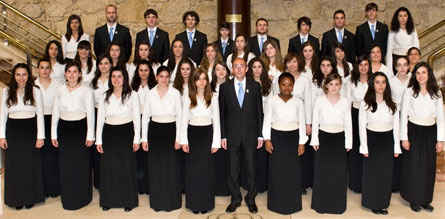
Wonderful San Marino Chamber Choir and Director Tammi Alderman, sure deserve great marketing. Spain and Portugal are awaiting your arrival!


Concert Card for San Marino Chamber Choir Performance Tour 2014.


Incantato proudly presents the concert posters for Oviedo, Porto and Lisbon concerts for the San Marino Chamber Choir 2014 Performance Tour to Spain and Portugal. 


Monday, March 17, 2014

Fado, singing blue in Portugal

                                          
A shawl, a guitar, a voice and heartfelt emotion. These are the ingredients of Fado, the celebrated form of world music that captures what it is to be Portuguese. Fado is probably the oldest urban folk music in the world and represents the heart of the Portuguese soul. Listening to Fado is like visiting Lisbon, meeting the Portuguese people, those that once upon a time faced the unknown sea. This type of music that connected nobles, vagabonds and seafarers, is still nowadays a shared passion by all Portuguese. Fado has been recognized last November 2011 by the UNESCO as Inmaterial              Humankind Patrimony.

TYPES OF FADO
Fado can be performed by men or women, although the raw emotion of the female fadista is nearly always preferred. Dressed in black with a shawl draped over her shoulders, a fadista stands in front of the musicians and communicates through gesture and facial expressions. The hands move, but the body remains stationary. It’s a solemn and majestic performance.

Traditionally accompanied by the Portuguese guitar, there are many ways of singing the Fado. It can range from the faster Fado corrido of Mouraria, to the impromptu singing known as ‘desgarrada’, or the mournful music of the students of Coimbra. And the well known Fado Vadio (Vagrant Fado), which is characterized by the place where it was born and sang for so long, the streets!


There are two main varieties of Fado, namely those of the cities of Lisbon and Coimbra. The Lisbon style is the most popular, while Coimbra's is the more refined style. Some of their characteristics are that in Lisbon it is always sung by a solo performer on the contrary, in Coimbra it is often performed by groups of male university students. Both are accompanied by two guitarists, one playing the melody on a twelve-stringed Portuguese guitar and the other supplying the rhythm on the six-stringed viola. In Coimbra we find the usual Fado’s sad style, but with different motivations and also based in the medieval songs called trovas.
Inspiration for Fado can come from almost any source, with predominance of themes like: destiny, deep-seated feelings, disappointments in love, the sense of sadness and longing for someone who has gone away, the sea, the life of sailors and fishermen, and last but not least “Saudade” (one of the main themes used in Fado, that means a kind of longing).

POSSIBLE ORIGINS OF FADO


The word Fado comes from the Latin fatum, which means fate or destiny. Fado, in a certain way, represents better than anything the spirit of the Portuguese people: the belief in destiny as something that overwhelms us and from which we can't escape, the domination of the soul and heart over reason, which leads to acts of passion and despair, and reveal such a black and beautiful sorrow. There are many theories about the origin of Fado, like:
  1. Fado has its origin in Moorish songs; Moors kept living near Lisbon even after the Christian take-over. The melancholy of those songs and the referral in many lyrics to Mouraria strengthen this theory.
  2. Fado arrived to Portugal with the sailors returning from their long trips (1822), under the form of Lundum (the music of the Brazilian slaves). Lundum only after a while started modifying until it became the Fado. The first lundum songs related to the sea and the lands far beyond them, where the slaves lived. Then, one of Amália's Fados, called "The Black Boat" talks precisely of a senzala (place where the slaves were kept).
  3. The melancholy character of Fado evolved from Portuguese seafarers who sang of home during their long absences at sea.
  4. Fado was born in the Middle Ages. As cantigas de amigo (friend songs) are a good example of it. They were love songs dedicated to a woman and have great similarities with diverse subjects of the Fado of Lisbon. Also with the Fado of Coimbra, where the students intone their songs beneath the window of the loved one (serenades).
HISTORY OF FADO

Fado became popular thanks to the singer Maria Severa who lived in the first half of the 19th century and died at the age of 26. She made this type of song famous in aristocratic circles through her romance with the Count of Vimioso. Her life later became the subject of Portugal's first sound movie in 1931. To this day, female performers wear a black shawl in her memory and her life story has been the influence of several Fado songs, poems, novels, and plays.

By the early twentieth century, Fado had become a fixture in the everyday life of Lisbon’s working class. It was played for pleasure and also to relieve the pain of life. Fadistas, skilled singers that performed at the end of the day and long into the night. Fado was the earthly music of taverns, brothels and street corners mainly in Alfama, Mouraria, Bairro Alto and Madragoa. Fado reached its golden era in the first half of the 20th century, when the Portuguese dictatorship of Salazar (1926-1968) forced the fado performers to become professional and confined them to sing in the fado houses and the so called "revistas", a popular genre of "vaudeville". The main names of this period were: Alfredo Marceneiro, Amália Rodrigues, Maria Teresa de Noronha and Armandinho and Jaime Santos (guitar players).


From the 1940’s until 1999 Fado was shown to the world through the voice of one amazing artist, Amália Rodrigues, the towering figure of Portuguese fado. In the 20th century she made Fado known beyond Portugal, performing all over Europe, Japan, South America, and even in the United States, in New York's "La Vie en Rose" in the 1950s. When she died the country’s prime minister called for three days of national mourning, and as a national icon, she was buried in Lisbon's National Pantheon.
Amália has found a worthy successor in Mariza, who takes Fado to an even wider audience. Other very important names of Fado are Maria da Fé, Hermínia Silva, Argentina Santos and Carlos do Carmo.

Nowadays in Portugal, the younger generation respects fado but isn’t dedicated to it. Contemporary fado musicians like Misia have introduced the music to performers such as Sting. Cristina Branco, Dulce Pontes, Camané, Mafalda Arnauth and Katia Guerreiro are other sonant artists that keep Fado alive, and brought with them a new look to the traditional song, occasionally reviving 19th century Fado. Amendoeira.

And also please note that despite Fado being a symbol of the Portuguese nationality, it is, by no means, the national song. From region to region, Portugal possesses several rich and typical folklores of each geographical area that have nothing to do with Fado. Perhaps we can, if you want, to say that this will be the form of folklore of Lisbon, Oporto and Coimbra. However, it is appreciated and recognized in all the Portuguese country as a symbol. This is the spirit of fado, the expression of a collective soul, made of each one's soul.


Sources: Clube de fado, www.fado.com, Historia do Fado, Pinto do Carvalho, A history of the Portuguese Fado , Paul Vernon,…

Saturday, March 15, 2014

SMCC 2014: Incantato proudly presents San Marino Chamber Choir at Sao Francisco Church (Porto), on Thursday April 3, 7 pm

The San Marino Chamber Choir, under the direction of Tammi Alderman, will present their "Chants of the World - Cantos do Mundo"  Choral Concert at the Igreja Monumental do Sao Francisco de Porto, on Thursday, April 3, at 7 pm.


This outstanding temple is a must-see monument that amazes all visitors, and a cultural reference of the second most important city of Portugal. The Igreja de Sao Francisco is a perfect example of rococo or late Baroque architecture: its golden-covered pillars and columns are extremely ornate with cherubs, rose garlands, fruits, and animals.

The St Francis Church was built between
1383 and 1410, which can be recognized in its
strict gothic facade. During the 17th and 18th centuries the temple underwent a huge baroque decoration renewal, which gave place to an interior of gilded wood carvings and earthly designs made of gold. Amidst all these, the remarkable Tree of Jesse, which is a visual representation of Jesus’ family tree, which traces its way back to Jesse, the father of David.

Adding to the experience are the catacombs beneath the church’s three interior chapels. These catacombs house the church’s small museum that keeps artifacts from the former Franciscan monastery. Nowadays the Igreja Monumental do Sao Francisco de Porto is open as Museum and Monument, and also classical music concerts are often held here.

Sunday, March 2, 2014

SMCC 2014: Choral Exchange and Concert: San Marino Chamber Choir with the Escola de Música do Conservatório Nacional of Portugal, Lisboa, Saturday, April 5.

San Marino Chamber Choir will enjoy a Choral Exchange with the students of the National Conservatory of Portugal, during their Incantato Performance Tour to Spain and Portugal, on Saturday April 5th. The Choral Concert will take place at 3pm.


The Escola de Música do Conservatório Nacional - School of Music of the National Conservatory of Portugal - is based in the capital city Lisbon, hosting a regular program of concerts and masterclasses for the students and the citizens, to increase the musical and cultural level of the city.
The Escola de Música mission is to qualify students through a solid education in its multiple facets: humanistic, scientific, historical, ethical, ecological, aesthetic, artistic and musical; empowering them for a professional option as musicians.

The Coro Musaico - Musaico Choir, under the direction of Tiago Marques, will meet San Marino Chamber Choir for the choral exchange and Joint Concert that San Marino Chamber Choir and Musaico will present at the Conservatory Concert Hall at 3pm on Saturday April 5..
Coro Musaico runs this year a light music programme of choice, but their repertoire comprises all kinds of styles. Here you can see Musaico on a performance celebrating the Day of Song, under the direction and solo from Maestro Tiago Marques.


The Coro Musaico is one of the choirs under the Escola de Música do Conservatorio. Here you can watch the Orquestra de Câmara and the Coro Géral performing together Vivaldi's Gloria.


The creation of the Conservatory in Lisbon is directly linked to the action of Portuguese musician João Domingos Bomtempo (1775-1842), known primarily as a pianist and composer, but also as an excellent educator. Following the Liberal victory (1834), he gave substance to his plans to reform the teaching of music in Portugal.

The Royal Conservatory of Lisbon remained basically unchanged until 1901, with a major reform headed by Augusto Machado (1845-1924), Director of the School of Music from 1901 to 1910, who guided the Conservatory in the ways of modernity, updating the curricula and repertoires of various instruments. 

Currently, the School of Music of the National Conservatory is identified with the traditional Conservatory institution, remaining in the same building of Caetanos and continuing to be a major player in the Portuguese musical training. 

Saturday, March 1, 2014

SMCC 2014: San Marino Chamber Choir sings for Mass at Santiago de Compostela Cathedral, April 2, at 7,30 pm.

The San Marino Chamber Choir will sing Mass at Catedral de Santiago de Compostela on Wednesday, April 2, at 7:30 pm.


The Catedral de Santiago de Compostela is the most outstanding building of Romanesque art in Spain. It is also the final destination of all the Ways of St. James - Camino de Santiago, which, during centuries, have brought Christendom’s pilgrims to the apostle’s tomb. And that is not all; it is the starting point for the construction of the monumental city of Santiago de Compostela, that arose in a sacred forest at the End of the World, with the vocation of becoming a Holy City and a World Heritage City.
Today, with a thousand years of existence experienced at the pace of Compostela’s extraordinary history, the Cathedral reveals itself to be a complex series of spaces covering an area of around 10,000 square metres, capable of rewarding with its powerful spirituality the faith of travellers, and with its beauty visitors from all over the world.


Construction on the cathedral was begun in 1075 in the reign of Alfonso VI, and sponsored by Bishop Diego Peláez. The work took place under the direction of Master Esteban on the remains of old churches built in devotion to the saint. 
It was built with three naves and a floor plan in a Latin cross, and had an area of about 8300 m². Its countless extensions have added numerous architectural styles to the building (Romanesque, Gothic, Baroque, Plateresque and neoclassical). 


The La Gloria portico is the main entrance, and was created by Master Mateo in 1188. It features 200 figures referring to the Apocalypse, and the figure of Saint James the apostle appearing to welcome the pilgrims, supported on a column rising from the mullion. 
The Obradoiro façade of the cathedral is the work of Fernando de Casas y Novoa, and is considered to be one of the supreme expressions of the Spanish Baroque. The main altar is also in the Baroque style, and the crypt of Saint James the apostle lies directly beneath.

The Cathedral of Santiago has different and beloved traditions, that both locals and pilgrims arriving each year graciously fulfill: a hand on the St. James pillar, a head on the Master Mateo sculpture, the botafumeiro incense burner swinging... distinctive and unique usages with a deep spiritural or cultural meaning that are kept for centuries. We are sure you will discover and enjoy them during the visit to Santiago, and we will present them here soon.
For more information and further posts, you can suscribe to this blog. We will keep updating!

SMCC 2014: Joint Concert: San Marino Chamber Choir will perform together with the Youth Choir of the Prince of Asturias Foundation, at Auditorio de Pola de Siero, Asturias, April 1, at 8pm.

San Marino Chamber Choir and Joven Coro de la Fundación Principe de Asturias will offer a Joint Concert on April 1, at 8pm, as a wonderful finale to their Choral Exchange program, at the very Auditorium of Pola de Siero, Asturias.


This busy Auditorium, designed by the bureau of Benito Diaz Prieto, has been inaugurated in 2011.
Since them, many international and national artists have performed for a welcoming "asturiana" audience: classical music, traditional concerts, theatre, dance, and all kinds of performances like: Ara Mailikian, Fernando Egozcue, Symphonic Orchestra of Asturias, CONSMUPA, Danza Invisible, Orquesta Autónoma de Cantabria, Joaquin Pixán...


The cultural complex of the Auditorium is composed by the main Concert Hall, with 680 seats, and a same dimensions wide stage: 25 x 25 metres.


The Auditorium complex also hosts a smaller Concert Hall with 170 seats, as well as a Public Library for adults, children and babys, and the Main Cultural Centre of the city of Pola de Siero.

Nowadays, the Auditorium stands as one of the cultural hubs of the northern region of Spain, gaining importance for the culture and arts.


SMCC 2014: San Marino Chamber Choir presents Recital at Catedral de León on March 31.

The San Marino Chamber Choir, under the direction of Dr. Tammi Alderman, was granted permission to present a special recital at the marvellous Catedral de León, the gothic masterpiece in Leon, Spain, on Monday March 31, at 12:30, during their 2014 Incantato Performance Tour to Spain and Portugal


The Cathedral of Leon can look back on a 800-years history. The Pulchra Leonina, as it was called (latin) due to its outstanding beauty, is a remarkable visit for travelers, artist, archeologists and pilgrims, as it is a main stop along the Camino de Santiago - Way of St. James.

The Catedral de Santa María de Regla de León (as it is officially named) is a French-style Gothic cathedral was begun to be built by Bishop Martin Fernandez, with funds from King Alfonso the Wise, in 1255 over the ruins of 2nd-century Roman baths, and stands as probably the finest Gothic building in Spain, closely modeled on the Flamboyant Gothic royal cathedrals of France, and sharing master carvers with Burgos cathedral.

The north transept adjoins to the 13th- and 14th-century cloister, which has carved capitals, Romanesque and Gothic tombs, and some faded frescoes.
Inside, some 125 medieval stained glass windows illuminate a harmonious, fully French Gothic interior with three aisles, a short transept, a five-bay choir, and an ambulatory with radiating chapels.

The effect of the pale stone combined with dazzling rays of sunlight filtering through the windows have given the cathedral the nickname "House of Light." 

León Cathedral's choir stalls, among the oldest in Spain, were carved of walnut by Flemish artists in the 15th century. A much-revered statue of the Virgen de la Esperanza, depicting the Virgin Mary when she was pregnant with Jesus, dates from the 13th or 14th century and is displayed in a side chapel off the choir.

For more information on the history and significance of this venue, please visit the official Catedral de Leon website.

SMCC 2014: Incantato proudly presents the Choral Exchange with the Youth Choir of Prince of Asturias Foundation

Dear travellers and friends of San Marino Chamber Choir,

What an exciting exchange: San Marino Chamber Choir and the Joven Coro de la Fundación Principe de Asturias (Youth Choir of the Prince of Asturias Foundation) will meet, sing and share time and music on on March 31 and April 1st in Asturias.

Prince of Asturias Awards Finale Concert with Prince of Asturias Choir

The Prince of Asturias Foundation, under the Presidency of HRH The Prince of Asturias, has a great international reputation, due to cultural activity along the year (as Prince of Asturias Awards), and also to the high quality of its musical activities and choirs under its Music Department. 
You can take a look to the videos of some Awards Ceremonies here
(By the way, let me share with you that it was during this Awards that HRH The Prince Felipe got to met his wife Letizia, now Princess of Asturias, where she was working as special journalist for the TV)

The Music Department
In 1983 the Prince of Asturias Foundation, a private organization whose aim is to contribute towards strengthening the links between the Prince of Asturias, the heir apparent to the Spanish throne, and the Principality of Asturias, formed a polyphonic group that whilst fostering the traditional love of the people of Asturias for choral music, would elevate it to its greatest heights. 
With Jesús López Cobos and Krzysztof Penderecki as Honorary Conductors, the Music Department runs different activities during the whole year: International Music School, the Concerts and the Choirs.

THE YOUTH CHOIR
The Youth Choir was founded in 1988 and is currently made up of young musicians from 15 to 25 years of age. It is one of the three choirs –also the Senior Choir and the Children’s Choir- that make up the Music Department of the Prince of Asturias Foundation, which has more than 300 voices. 
(Click on the image to enlarge it) Under the conduction of José Ángel Émbil, the Youth Choir has performed throughout Asturias on numerous occasions. It toured Germany with great success in 1990 and took part in the Clermont-Ferrand International Youth Choir Festival (France).
They keep performing at national concerts.
In 2001, they obtained the second Prize at the Children’s Festival in Habaneras, held in Torrevieja. In April 2002, they offered two concerts in Barcelona and in June they performed at the Jerónimos Church in Madrid.
In 2005, the Choir returned to Madrid to sing in the El Pardo Royal Palace on occasion of the meeting of the Board of Trustees of the Foundation, at a concert that was presided over by T.R.H. the Prince and Princess of Asturias.
In December the Choir returned to Madrid to perform at a concert in the Royal Palace for the staff of the National Heritage. The concert was presided over by H.R.H. the Prince of Asturias.
During the XXIX Religious Music Week (2006), the Choir premiered Diez villancicos pixuetos at the Saint Nicholas of Bari Church, by Elvira Bravo and the Fernández Ahuja brothers, and restored and harmonized by José Mª Martínez.
In 2009, they celebrated a exchange with the Youth Choir of the Performing Arts School in Kentucky (U.S.A.) at a concert in the Chamber Music Hall of the Prince Felipe Auditorium in Oviedo. The concert, a part of YPAS performing tour with Incantato, was a great success, where the magnificent composer Richard Burchard presented as European premiere "A song of Eternal Love". 


The choir has premiered pieces specially written for it by composers like Alfonso Sánchez or Luis Vázquez del Fresno. It is also a source of new voices for the Senior Choir, which has already reached unquestionable prestige in Spain and abroad.
The Youth Choir covers a wide repertoire, from elder to contemporary music and from religious to popular music. The members of the Choir rehearse for more than five hours every week and attend classes of music theory and vocal technique with the teachers of the Choirs of the Prince of Asturias Foundation.

Prince of Asturias Foundation Choir
Conducted by José Esteban G. Miranda, the Prince of Asturias Foundation Choir is regarded as one of the most important amateur groups in Europe and its prestige is world-renowned. Jesús López Cobos, the 1981 Prince of Asturias Award Laureate for the Arts, has been the honorary conductor of the choirs since their inception. He currently shares this role with Krzysztof Penderecki, who received the same Award in 2001. In December 2007, the European Parliament recognised the Choir with a special honour "for its outstanding services for the European Union".

Choirs and Internatinal Music School
They are the result of the educational work carried out by the Prince of Asturias Foundation's Music Department over the last twenty-five years. This explains why, along with its work recovering and fostering Asturian musical and choral traditions, it was chosen by the International Music Council (IMC), an organisation responsible to the United Nations, as an "Example to the World" in its support for music teaching and training. It was invited to present its work, aimed at fostering music, in the first "World Music Forum", which was held in Los Angeles, USA.

The Choral Exchange with San Marino Chamber Choir
The program of this upcoming and exciting choral exchange is divided in 2 days, in which both choirs will have the opportunity to meet, sing, share and rehearse as well.
The Choral Exchange will end in a Joint Choral Concert on April 1st, in the brand new Auditorium of Pola de Siero.
For further information, you can suscribe to this blog, where we will update frequently.

Friday, February 28, 2014

SMCC 2014: San Marino Chamber Choir performs mass at Cathedral of La Almudena (Madrid): Sunday, March 30, at 7 pm.

The San Marino Chamber Choir, under the direction of Tammi Alderman, will be featured choir at the imposing  "La Almudena", as "madrileños" like to call the Cathedral of Madrid, on Sunday, March 30, at 7 pm.


The principle church of the Diocese of Madrid, the Catedral de Santa María la Real de la Almudena, is a relatively modern building, started in 1883 and not completed until 1993. 


The cathedral is consecrated to Santa Maria de la Almudena, a name which has Arabic origins: al mudayna, means "the castle". Legend has it that in the 8th century, when the Moors invaded the fortress where Madrid now stands, the people hid an image of the Virgin in the city walls, and only when the city was reconquered in the 15th century did a wall crumble to reveal her presence once again. Some versions suggest that the legendary el Cid found the image in the wall, and the Virgen helped him to retake the city.


The building is a mixture of styles with a neoclassical exterior, a gothic revival interior, and a neo-romanesque crypt. It is constructed of granite and marble, with a large neoclassical cupola and two towers at the main entrance. The Catedral de Santa María la Real de la Almudena sits next to the Palacio Real, separated from it by a spacious square, the Plaza de la Armería.


Unusually for a church, it is not oriented east and west, but has its orientation north and south, as it was originally conceived as an integral part of the Royal Palace complex. A second entrance, in the Calle Bailén, has impressive bronze doors by the sculptor Sanguino, depicting the discovery of the image of the Virgin.

Tuesday, September 17, 2013

News from Madrid, presented by Incantato Tours

In the past, Madrid has often been considered the stately, classical cousin to the cooler, hipper Barcelona. However, the ambiance of Spain's capital is changing and it is evolving into a trendy destination in its own right.

One of the main contributors to this transformation has been the emerging and contemporary art exhibitions and there has also been a spike in shopping venues opened with international visitors in mind. 
One of the events to watch is the fourth annual Apertura contemporary art exhibition, presented by the ARTE Madrid Association of Art Galleries. The festival features simultaneous activities at museums and some 50 galleries city-wide.  

There will also be the first ever Summa, a fair hosted by the Matadero Madrid cultural center, that will showcase everything from emerging art and photography to gastronomy. The Matadero center itself is also a happening venue, with year-round events and exhibitions. Located in the previously less touristed Arganzueal district, the center has revitalized that part of the city. 
If shopping is more of interest to you than art, be sure to watch out for the Las Rozas Village. It is a large complex that acts not only as a tourist draw, but is also set to help revive the country's down economy. Close to Gran Via is also TriBail, featuring young designers, appealing shops and one-of-a-kind boutiques. 
An addition to the thriving shopping and art scene, the San Anton Market has also been a valuable addition to what Madrid has to offer. Situated in the popular neighborhood of Chueco, which is a hub of welcoming restaurants, this modern, refurbished market offers visitors typical season Spanish products in a three-story building. The building originally dates back to the 19th century, but it was modernized in 2002 and finally opened in 2011. San Anton is not a market in the traditional sense, but a combination between market, show cooking and restaurant. 

On the first floor, vendors present stands of food from hamburgers to a selection of more than 60 types of bread, vegetables and fruit. On the second floor, there is a tasting area, as well as the opportunity to purchase Spanish and international cuisine to go. A restaurant is located on the third floor where typical products form the market below are cooked. It also features a terrace lounge with a view.

For more news from Travel Weekly, please click here. 

Tuesday, September 10, 2013

Incantato Update: Lisbon

Lisbon was voted top city destination in Europe!
Portugal’s cosmopolitan and intriguing capital has been named Europe’s Leading City Break Destination 2013 at the World Travel Awards, considered to be the “Oscars” of tourism.
This win is the third time Lisbon has been recognized as Europe’s Leading City Break Destination over the last five years. Known for its year-round pleasant climate, rich culture and beaches located just 20 minutes from the city center, Lisbon also has a price-quality ratio unrivaled anywhere else in Europe.

Wednesday, August 28, 2013

SMCC 2014 Incantato Tour Hotel: Your hotel in Oviedo, Spain

The Silken Monumental Naranco, a 4-star hotel in Oviedo, has 62 rooms and 2 junior suites. In addition to a restaurant service, it also has 4 adaptable function rooms for different events, an indoor heated pool and a fitness area with a sauna, which will make the leisure time very pleasant.

The rooms are comfortable and fully soundproofed. Equipped with either double bed or twin beds, large work desk with internet connection, LCD screen TV and Satellite TV, piped music and radio, central heating and air-conditioning, minibar, phone and safe deposit box. It also offers marble bathrooms equipped with a bathtub, hair drier, phone line, mirror and refreshing green tea amenities.

Lovers of culture will find at the Monumental Naranco Hotel the best option for visiting the main Pre-Romanesque monuments of the city, the churches of Santa María del Naranco and San Miguel de Lillo, located on the skirts of Monte Naranco, just five minutes from the hotel. Oviedo’s Gothic Cathedral is a must-see, as are the streets of the old town.

SMCC 2014 Incantato Tour Hotel: Your home away from home in Madrid


The Hotel Husa Paseo del Arte, is a 4 star hotel located in the city center of Madrid, Spain, close to the privileged surroundings of the "Art Triangle", the Prado Museum, the Thyssen Bornemisza and the Reina Sofia Centre of Art.

It has 260 rooms equipped with the latest facilities and new technologies. The rooms have twin or double beds, desk, minibar, free safety deposit box, satellite and digital TV, laundry service, room service and Wi-Fi.


The hotel has a breakfast room, the “Atocha 1,2,3” cafeteria, the Trazos restaurant, a fitness room and solarium on the top floor, Wi-Fi throughout the hotel, room service and a spacious car park.


SMCC 2014 Incantato Tour Hotel: Your home away from home in Santiago de Compostela, Spain

The NH Obradoiro Hotel in Santiago de Compostela with its 159 rooms delivers modern luxury in a timeless setting. Located just minutes from the historic Plaza del Obradoiro, the monumental heart of the city, centuries of charm wait just outside your door.
The hotel offers an array of amenities and facilities for its guests such as state-of-the-art gym, Turkish bath, indoor and outdoor swimming pools, dry cleaning service and fully equipped meeting rooms. It also has a sauna and offers traditional Galician dishes at their restaurant "Azabache" (Spanish for "jet").

The standard rooms at NH Obradoiro are anything but ordinary, offering modern amenities such as a flat-screen TV, free WiFi, free credit card access calls, air conditioning and personal minibar. The rooms are also equipped with your choice of pillows, alarm clock, desk and hairdryer.


SMCC 2014 Incantato Tour Hotel: Your last home away from home in Lisbon, Portugal

The 5-star hotel Tiara Park Atlantic Lisboa, is located in the heart of Portugal's capital city.

The contemporary luxury hotel is near Lisbon's historic center, the metro, and shopping areas, catering to both business and leisure guests. The Gulbenkian Gardens and Center of Modern Art are also nearby.

The hotel offers free wifi and the rooms are equipped with climate control air conditioning, minibar, ironing board (on request), hypo-allergenic bedding, safe, 23-inch LCD TV, Cable TV channels and room service. The Tiara Park Atlantic Lisboa was elected "Travelers' Choice® 2013 Luxury Winner" on Tripadvisor.