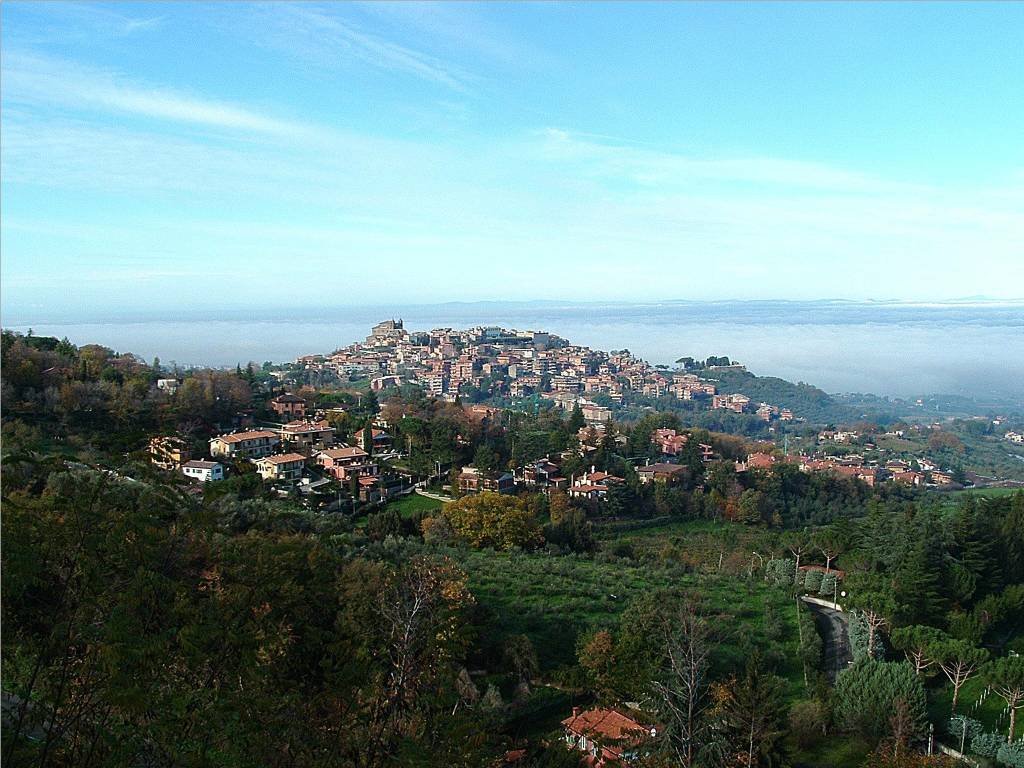
Maiori is a town and community on the Amalfi coast in the province of Salerno (Campania, Italy). It has been a popular tourist resort since Roman times, with the longest unbroken stretch of beach on the Amalfi coastline. The origins of the town are unclear but the original name of the town was Reghinna Maior, in contrast to the neighbouring town, Minori, Reghinna Minor. All places along the coast were formed by alternating conquerors - such as the Etruscans or the Romans. Between 830 and 840, the places of the coast united to form a confederation of Amalfi States. In this Amalfi Sea Republic, the places between Lettere and Tramonti and between Cetara and Positano, along with the island of Capri, were united; and their inhabitants were all called Amalfitaner. At that time, each city retained its own name and administrative autonomy, but had a specific role in this federation. Later it became part of the Principality of Salerno, and then of the Kingdom of Naples, of which it followed the history until the 19th century.
Saturday, October 9, 2010
Welcome to Maiori!
Maiori is a town and community on the Amalfi coast in the province of Salerno (Campania, Italy). It has been a popular tourist resort since Roman times, with the longest unbroken stretch of beach on the Amalfi coastline. The origins of the town are unclear but the original name of the town was Reghinna Maior, in contrast to the neighbouring town, Minori, Reghinna Minor. All places along the coast were formed by alternating conquerors - such as the Etruscans or the Romans. Between 830 and 840, the places of the coast united to form a confederation of Amalfi States. In this Amalfi Sea Republic, the places between Lettere and Tramonti and between Cetara and Positano, along with the island of Capri, were united; and their inhabitants were all called Amalfitaner. At that time, each city retained its own name and administrative autonomy, but had a specific role in this federation. Later it became part of the Principality of Salerno, and then of the Kingdom of Naples, of which it followed the history until the 19th century.
San Marino Chamber Choir sings at Monte Cassino Abbey on Thursday, April 7 at 3:00 PM
In addition to touring the facility, the San Marino Chamber Choir from San Marino High School in Los Angeles, California, will also perform a recital at the Monte Cassino Abbey on Thursday, April 7, 2011 at 3:00 PM.
Monte Cassino is a rocky mountain approximately 80 miles southeast of Rome. Saint Benedict of Nursia established his first monastery here, the source and foundation of the Benedictine Order, in 529. The monastery stands as one of the few territorial abbeys remaining within the Catholic Church.
According the Gregory the Great’s biography of Saint Benedict, the monastery was constructed on an older pagan sight, a temple of Apollo that originally crowned the hill. The biography claims that Benedict’s first act was to smash the sculpture of Apollo and destroy the pagan altar. He then reused the temple, dedicating it to Saint Martin, and built a new chapel which he dedicated to Saint John the Baptist. Once established at Monte Cassino, Benedict never left. There he penned the Benedictine Rule which ultimately became the founding principle of western monasticism. Monte Cassino became the model for future Benedictine developments throughout the world.
Unfortunately the Abbey has fallen target to numerous military insurgencies throughout the years, including the infamous 1944 Battle of Monte Cassino. On February 15, 1944, the Abbey was almost completely destroyed by Allied air-raids after being mistakenly identified as a German stronghold. In fact, the Abbey was being used as a refuge for women and children attempting to shield themselves from the war. The Abbey was rebuilt after the war, financed by the Italian State, and was reconsecrated by Pope Paul VI in 1964.
Labels:
Incantato Concerts,
Incantato Destinations
The San Marino Chamber Choir visits the Music Conservatory of Naples on Thursday, April 7, 10:00 AM
Home away from home: Hotel Cetus, Cetara
The San Marino Chamber Choir will stay at the Hotel Cetus on the night of April 3, 2011, as they visit the stunning Amalfi Coast. The Hotel Cetus commands a striking view, perched atop a hill overlooking the bay on the Amalfi Coast. The hotel is less than one mile from the quaint fishing village of Cetara. The elegant furnishings and refined atmosphere are inspired by the local tradition of ceramic art. The Hotel Cetus houses 37 guest rooms, all with beautiful sea-front views. Each room offers air conditioning, private bathrooms, and direct telephone lines. The hotel property also boasts a private beach with American snack bar. The on-site spa has just been recently remodeled and offers a variety of services from facials to massages.The Hotel Cetus received high reviews from recent travelers who commended the incredibly helpful staff and greatly appreciated the safety and security they felt during their stay. Additional reviews praise the gorgeous views from the clean and comfortable guest rooms.
Home away from home: Hotel Sole Splendid, Maiori
The San Marino Chamber Choir will stay at the Hotel Sole Splendid in Maiori on April 4 and 5.
Located along the Amalfi Sea and surrounded by citrus groves, Hotel Sole Splendid sits among Maiori’s most popular attractions. The six-floor hotel offers a restaurant and fitness room. Standard guest rooms are equipped with telephone, satellite television, heating and air conditioning, a covered balcony overlooking the sea, and an en suite bathroom with shower and hairdryer.
Recent guest enjoyed the comfortable family-owned environment of the Sole Splendid as well as its convenient location near Maiori’s local sights and shops.
Home away from home: Ramada Naples
The San Marino Chamber Choir will stay at the Ramada Naples on the night of April 6, 2011.
Located within the beautifully renovated former Palazzo dell-Auto building, the Ramada Naples is strategically located between the business area and historical center of Naples. The hotel’s 152 guest rooms offer satellite television, air conditioning, and personal safe, wireless internet access, and ensuite bathroom with hairdryer. Recent guest reviews award the Ramada Naples high ratings for cleanliness, comfort, and quality service.
Home away from home: La Pergola, Magliano Sabina
The San Marino Chamber Choir Tour will stay at La Pergola in Magliano Sabina on the nights of April 7 and 8, 2011.
One of Incantato's trademarks is to take our groups slightly of the beaten path for a day or two during their performance tours for a full immersion into the country they are visting. When the San Marino Chamber Choir Tour stops for two nights in Umbria en-route from Tuscany to Rome, they will stay at the countryside hotel "La Pergola" near the charming hilltop towns of Orvieto and Calvi dell'Umbria. Standard guest rooms come equipped with air conditioning, satellite television, telephone, iron and ironing board, and en suite bathrooms with shower/tub combination. Recent reviews complimented La Pergola on their helpful service and comfortable accommodations.
Home away from home: Hotel Capannelle, Rome
The San Marino Chamber Choir will stay at Rome's Hotel Capannelle from April 9 through 12, 2011.
The Hotel Capannelle Roma sits approximately 5.5 miles from the center of Rome and a 25 minute drive from Vatican City. From the hotel, guests can view the ancient “Villa dei Quintili” and the Roman Aqueducts. The hotel offers continental breakfast each morning, and the on-site Marco Polo Restaurant is open for lunch and dinner, serving a range of regional and international dinners in an informal atmosphere. The Hotel Capannelle’s 252 guest rooms come equipped with air conditioning, direct-dial telephone, blackout curtains, desk, safe, satellite television, wireless internet connection, and an en suite bathroom with shower/tub combination and hairdryer. Recent reviews compliment the hotel’s cleanliness and comfort as well as their helpful staff. Visit the Art Monastery
The Art Monastery Project, founded in 2007, is a community of artists dedicated to fostering creativity through commitment to a disciplined, contemplative, and sustainable monastic lifestyle.
Established by American, San Francisco-based artists Betsy McCall and Christopher Fülling, the project works to transform an historic Italian monastery into an international arts production center. The project investigates what the Art Monks refer to as “social sculpture,” developing a diverse variety of visual and performance art in a manner which focuses just as much on the creative process as the final product.
In striving to meld historical tradition with contemporary culture, the Art Monastery presents on-site exhibitions and performances as well as collaborations with the surrounding communities. However, work created within the monastery premieres locally before ever touring internationally.
Previously located in the small Italian town of Calvi dell’Umbria, the Art Monastery relocated to the hilltop town of Labro, approximately seventy minutes north east of Rome. The San Antonio monastery, a former 17th century Franciscan abbey, now serves as the official home of the Art Monastery Project. The site holds a state-of-the-art 150 seat theater for performances and exhibits. Hotel Colle di Costa and Ristorante Ulisse are also located within the structure.
A radical contemporary experiment in “social sculpture,” the Art Monastery is “ready to indulge visitors without hesitation…”
In addition to Labro, the Art Monastery hosts chapters in Los Angeles, Santa Barbara, San Francisco, Portland, Seattle, Reno, Bloomington, Chicago, Buffalo, and New York City.
Labels:
Incantato Concerts,
Incantato Destinations
Friday, October 8, 2010
Facts about Vatican City
Vatican City is a city-state that came into existence in 1929. It is distinct from the Holy See, which dates back to early Christianity and is the main Episcopal see of 1.147 billion Latin and Eastern Catholic adherents around the globe. Ordinances of Vatican City are published in Italian; official documents of the Holy See are issued mainly in Latin. The two entities even have distinct passports: the Holy See, not being a country, only issues diplomatic and service passports; the state of Vatican City issues normal passports. In both cases the passports issued are very few.
Vatican City is an ecclesiastical or sacerdotal-monarchical state, ruled by the bishop of Rome - the Pope. The highest state functionaries are all Catholic clergymen of various nationalities. It is the sovereign territory of the Holy See (Sancta Sedes) and the location of the Pope's residence, referred to as the Apostolic Palace. The Popes have resided in the area that in 1929 became Vatican City since the return from Avignon in 1377.
Incantato presents the San Marino Chamber Choir at Saint Peter's Basilica (Vatican) on Saturday, April 9 at 5:00 PM
The San Marino Chamber Choir will sing High Mass at Saint Peter's Basilica in Vatican City at 5:00PM on Saturday, April 9, 2011.
The Papal Basilica of Saint Peter is located within the Vatican City. St. Peter's Basilica has the largest interior of any Christian church in the world, holding 60,000 people. It is the symbolic "Mother church" of the Catholic Church and is regarded as one of the holiest Christian sites. It has been described as "holding a unique position in the Christian world" and as "the greatest of all churches of Christendom".
In Catholic tradition, it is the burial site of its namesake Saint Peter, who was one of the twelve apostles of Jesus and, according to tradition, first Bishop of Rome and therefore first in the line of the papal succession. Tradition and some historical evidence hold that Saint Peter's tomb is directly below the altar of the basilica. For this reason, many Popes have been interred at St Peter's since the Early Christian period. There has been a church on this site since the 4th century. Construction of the present basilica, over the old Constantinian basilica, be
gan on April 18, 1506 and was completed on November 18, 1626.
St. Peter's is famous as a place of pilgrimage, for its liturgical functions and for its historical associations. It is associated with the papacy, with the Counter-reformation and with numerous artists, most significantly Michelangelo di Lodovico Buonarroti Simoni (1475-1564), an Italian Renaissance painter, sculptor, architect, poet, and engineer. Michelangelo took over a building site at which four piers, enormous beyond any constructed since the days of Ancient Rome, were rising behind the remaining nave of the old basilica. He also inherited the numerous schemes designed and redesigned by some of the greatest architectural and engineering brains of the 16th century.
Incidentally there are over 100 tombs within St. Peter's Basilica, many located in the Vatican grotto, beneath the Basilica. These include 91 popes, St. Ignatius of Antioch, Holy Roman Emperor Otto II, and the composer Giovanni Pierluigi da Palestrina. Exiled Catholic British royalty James Francis Edward Stuart and his two sons, Charles Edward Stuart and Henry Benedict Stuart, are buried here, having been granted asylum by Pope Clement XI. The most recent interment was Pope John Paul II, on April 8, 2005.
The Papal Basilica of Saint Peter is located within the Vatican City. St. Peter's Basilica has the largest interior of any Christian church in the world, holding 60,000 people. It is the symbolic "Mother church" of the Catholic Church and is regarded as one of the holiest Christian sites. It has been described as "holding a unique position in the Christian world" and as "the greatest of all churches of Christendom".
In Catholic tradition, it is the burial site of its namesake Saint Peter, who was one of the twelve apostles of Jesus and, according to tradition, first Bishop of Rome and therefore first in the line of the papal succession. Tradition and some historical evidence hold that Saint Peter's tomb is directly below the altar of the basilica. For this reason, many Popes have been interred at St Peter's since the Early Christian period. There has been a church on this site since the 4th century. Construction of the present basilica, over the old Constantinian basilica, be
gan on April 18, 1506 and was completed on November 18, 1626.St. Peter's is famous as a place of pilgrimage, for its liturgical functions and for its historical associations. It is associated with the papacy, with the Counter-reformation and with numerous artists, most significantly Michelangelo di Lodovico Buonarroti Simoni (1475-1564), an Italian Renaissance painter, sculptor, architect, poet, and engineer. Michelangelo took over a building site at which four piers, enormous beyond any constructed since the days of Ancient Rome, were rising behind the remaining nave of the old basilica. He also inherited the numerous schemes designed and redesigned by some of the greatest architectural and engineering brains of the 16th century.
Incidentally there are over 100 tombs within St. Peter's Basilica, many located in the Vatican grotto, beneath the Basilica. These include 91 popes, St. Ignatius of Antioch, Holy Roman Emperor Otto II, and the composer Giovanni Pierluigi da Palestrina. Exiled Catholic British royalty James Francis Edward Stuart and his two sons, Charles Edward Stuart and Henry Benedict Stuart, are buried here, having been granted asylum by Pope Clement XI. The most recent interment was Pope John Paul II, on April 8, 2005.
Tour the Vatican Museums and the Sistine Chapel
Incantato's visit to the Vatican Museums & Sistine Chapel will be led by a specialized docent/expert 
guide and is just open to members of your tour. We also provide headsets to everyone for a truly individual experience. This is an exceptional opportunity for an intimate visit and lecture on the Vatican and its impressive art collection without the press and chaos of the crowds.

Please note that not all galleries will be accessible to us during this after hours visit. The Pinacoteca and Egyptian collections are not available for viewing after closing hours. The opportunity to view the Belvedere Courtyard is also dependent on the route the Vatican guards allow us to take. We normally spend a significant amount of time (35-40 minutes) inside the Sistine Chapel and divide the rest of our time between the Gallery of Maps, Tapestry Gallery, and Raphael Rooms, including other collections as time and security permits.
Thursday, October 7, 2010
Incantato Destination: Monte Porzio Catone, Italy
Monte Porzio Catone is a municipality of the Province of Rome in the Italian Region of Latium and lies approximately twenty kilometers southeast of Rome in the Alban Hills. In addition to the Church of Saint Gregory the Great, erected in 1666 by Carlo Rainaldi for the Borghese family, some of the town’s main attractions include the Astronomical Rome Observatory, the Museum of Wine, the City Museum, and the Iseo Alari Community School of Music.
The Astronomical Rome Observatory was built in 1939 and is located two kilometers from the city center. The structure rises from the remains of “Matilda’s Villa,” a first century Roman Villa. Originally built for the purpose of preserving the equipment of the National Observatory in Rome, the rationalist-style Astronomical Rome Observatory now promotes astronomic and scientific studies through educational initiatives and exchanges with schools and universities.
Opened in 2000, the Museum of Wine not only provides visitors with wine tastings, but also takes guests through the process of creating wine. A tour of the museum teaches visitors, through the use of photos and demonstrations, the intricate steps of the wine production process. The museum even houses its own exclusive wine cellar.
The Monte Porzio City Museum is housed within a recently restored seventeenth century cathedral within the heart of the city. The museum illustrates the multi-thousand-year history of the city through such exhibitions as archeological findings, medieval papal pottery, and seventeenth century art.
The Iseo Ilari Community School of Music was founded by the Monte Porzio Catone City Administration in 1999. Through not only classes, but also performances and workshops, the school succeeds in encouraging social interaction and acceptance through the dissemination of music and cultural arts. The school, a recognized institution of the Italian Association of Schools of Music, currently offers studies in Classical Tradition and Music Performance.
City Facts about Rome
- Rome's early history is shrouded in legend. According to Roman tradition, the city was founded by the twins Romulus and Remus on 21 April 753 BC.
- Due to this centrality on many levels, the city has been nicknamed "Caput Mundi" (Latin for "Capital of the World") and "The Eternal City".
- Its rich artistic heritage and vast amount of ancient, notably architectural and archaeological sites, contribute to the city's UNESCO World Heritage Sites.
- Rome is the third-most-visited tourist destination in the European Union.
- The city is also an important worldwide hub of the cinematic and filming industry, home to the important and large Cinecittà Studios, which saw the filming of several internationally acclaimed movies as well as television programmes.
- The Rome metropolitan area has a GDP of €109.4 billion (US$ 149.14), and according to a 2008 study, the city is the world's 35th richest city by purchasing power.
- The city hosted the 1960 Olympic Games and is also an official candidate for the 2020 Olympic Games.
- Rome is an important centre for music, and it has an intense musical scene, including several prestigious music conservatories and theatres. It hosts the Accademia Nazionale di Santa Cecilia (founded in 1585), for which new concert halls have been built in the new Parco della Musica, one of the largest musical venues in the world.
- A Jewish influence in the Italian dishes can be seen, as Jews have lived in Rome since the 1st century BCE. Examples of these include "Saltimbocca alla Romana" - a veal cutlet, Roman-style; topped with raw ham and sage and simmered with white wine and butter - and "Carciofi alla giudia" - artichokes fried in olive oil, typical of Roman Jewish cooking.
Subscribe to:
Posts (Atom)